
Cyberrealistic Pony is a photoreal fine-tune of Pony Diffusion V6 XL by Cyberdelia, the same author behind the SDXL-base Cyberrealistic XL and the SD1.5 Cyberrealistic line. It sits in an awkward but useful middle: it speaks Pony's score-tag prompt language and inherits Pony's pose and named-character vocabulary, but renders output as photographs rather than cel-shaded anime. If you've spent a year on Pony and want photo aesthetics without retraining your prompting muscle memory, this is one of two checkpoints aimed at exactly that gap. If you've never touched Pony at all, the score-tag syntax will feel alien and a generalist photoreal SDXL fine-tune will probably serve you better.

What Cyberrealistic Pony Is
Cyberrealistic Pony is a Pony Diffusion XL derivative trained to push the base model's output distribution toward photoreal rendering while keeping its prompt grammar and concept coverage intact. The author, Cyberdelia, is a known Civitai fine-tuner specialized in photoreal checkpoints — SD1.5 Cyberrealistic was one of the earliest reliable photoreal SD1.5 models, Cyberrealistic XL is its SDXL-base successor, and Cyberrealistic Pony is the Pony-flavored sibling. They share an aesthetic DNA — colder, DSLR-leaning, film-grain-friendly — but each sits on a different base and expects different prompt syntax.
The base here is Pony Diffusion V6 XL, itself a heavily-fine-tuned SDXL checkpoint. What Cyberdelia changed is the rendering pass: skin shading flattened from anime cel-shading to subsurface-scattered photoreal skin, line-art emphasis pulled out, lighting moved from anime key-fill conventions toward photographic key/fill/rim/ambient, and overall grading shifted into colder DSLR territory. What was preserved: Pony's score-tag conditioning, poses, named-character knowledge, and NSFW capability without external scaffolding.
The positioning is narrow on purpose. Against vanilla Pony, Cyberrealistic Pony is the photoreal alternative for users who already have Pony muscle memory. Against generalist photoreal SDXL fine-tunes like Juggernaut XL or RealVisXL, it is the option for users who specifically want Pony's vocabulary — score tags, the explicit-rating split, the named-character coverage that vanilla SDXL fine-tunes do not have. It is not the right model if you want the broadest possible photoreal generalist. It is the right model if you want photoreal output with Pony semantics underneath.
The Pony Lineage And Why Photoreal Pony Exists
Pony Diffusion V6 XL was released in early 2024 as a Pony-team fine-tune of SDXL-base. The training set was about 2.6 million images drawn from anime, cartoon, furry and pony source material, with two structural decisions that shaped everything downstream. First, the rating split was balanced 1:1 across SFW, questionable and explicit content, which is why Pony handles NSFW without prompt engineering and why so many downstream fine-tunes inherit that capability. Second, training images were quality-graded and conditioning was rewritten so that prompts use a score-tag system — score_9, score_8_up, score_7_up and so on — instead of plain Danbooru tags or natural language. The score tags act as quality anchors the model learned to associate with the highest-quality training samples.
Pony also brought a deep named-character and pose vocabulary. Characters from anime, video games and Western cartoons that base SDXL barely knew became reliably-callable subjects. The pose vocabulary — explicit and otherwise — is denser than vanilla SDXL by a wide margin. That is what made Pony a phenomenon in 2024 and what every Pony derivative is, in some form, trying to keep.
The catch was output style. Pony's training set is overwhelmingly stylized — anime, cel-shaded, illustrated. Even pushed toward photo output with prompt boosters, the underlying model wants to render in stylized space. So a generation of fine-tuners started training photo-output models on top of Pony specifically to bridge the gap. Cyberrealistic Pony is one of two dominant ones in that niche. The other is Pony Realism by AiCreativity. Both inherit Pony's grammar, both target photoreal output, both occupy the same shelf — but they aim at slightly different aesthetic registers.

What Makes Cyberrealistic Pony Different From Vanilla Pony
The clearest way to describe the difference is to imagine running the same prompt through both checkpoints. Vanilla Pony with score_9, score_8_up, score_7_up, woman, sitting on a wooden chair, soft window light, white shirt gives you a high-end anime illustration: smooth shading, simplified skin gradients, stylized face geometry, anime lighting conventions where the key light produces a flat lit-area rather than realistic falloff. Gorgeous in its lane but unmistakably anime.
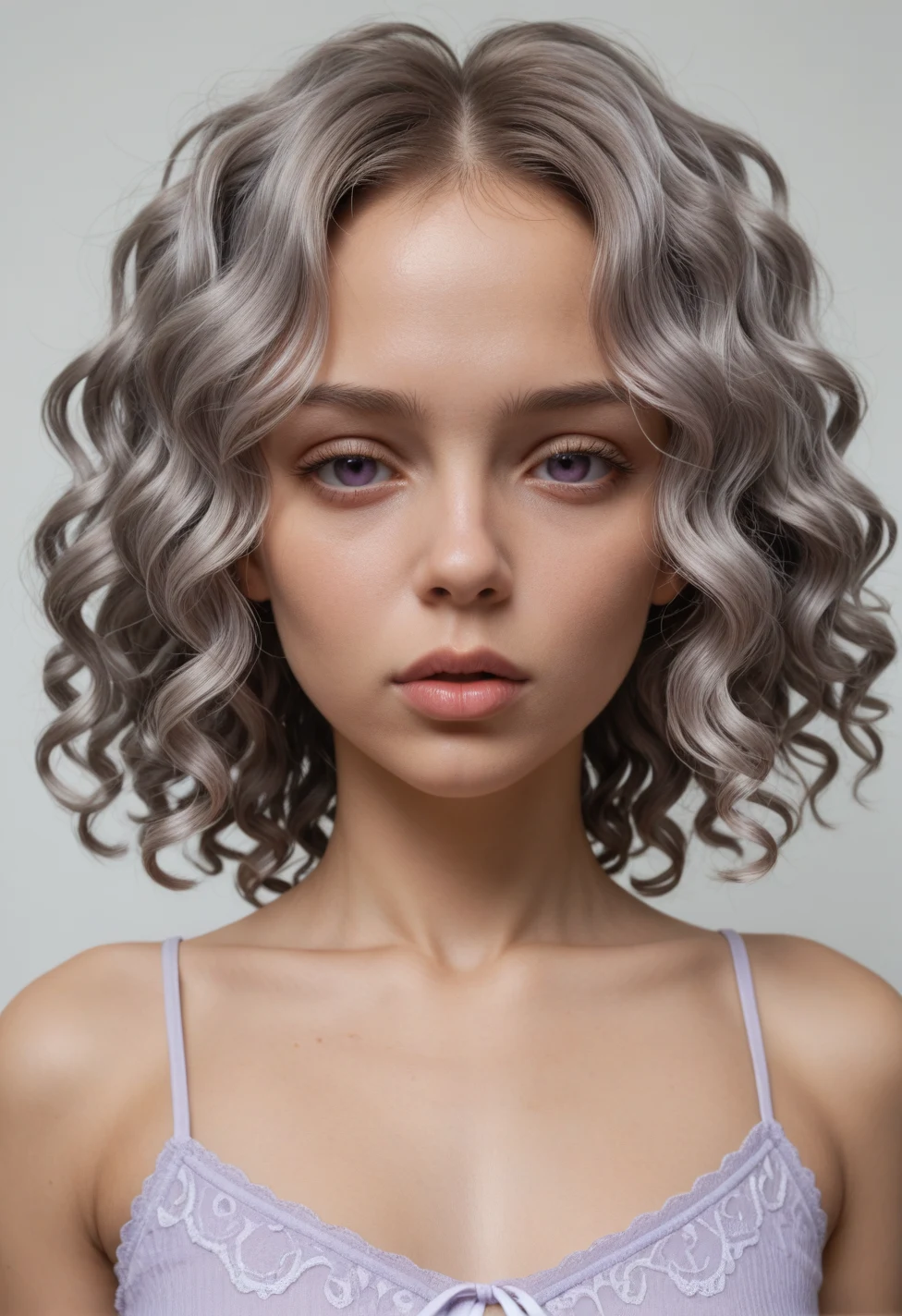
The same prompt on Cyberrealistic Pony produces a photograph. Skin has pore texture and subsurface scattering. Window light produces realistic fall-off across the cheek and shoulder. The chair shows wood grain rather than a chair-shaped color block. Anatomical proportions move from anime ratios to photographic ratios.
Concretely, Cyberrealistic Pony pushes:
- Photoreal skin with pore-level micro-texture, subsurface scattering, realistic blemish frequency.
- Real-photo lighting — hard shadows under directional sources, ambient fill behavior, lens-blur depth-of-field that respects focal-plane physics rather than anime DOF stylization.
- Realistic anatomy that escapes anime proportions. Eye-to-face ratio, nose definition, jaw and shoulder geometry all move toward photo references.
- Photographic color grading — colder cast, less saturation pump, more believable mid-tones.
What it does not change: the prompt grammar, the score-tag conditioning, the pose vocabulary, the named-character coverage and the NSFW behavior. You're still writing Pony prompts. You're just getting photographs out the back end.
Prompt Syntax — Score Tags + Realism Boosters
The score-tag block is non-negotiable. Cyberrealistic Pony was trained on Pony's conditioning, which means the model expects every prompt to start with the standard quality-anchor block. Drop them and outputs degrade visibly. Below are three working prompt patterns. They are not optimal — they are concrete starting points to riff from.
Basic SFW portrait:
``` score_9, score_8_up, score_7_up, realistic, photo, photograph, professional photography, dslr, film grain, skin texture, hyperrealistic, woman, mid-thirties, sitting at a wooden cafe table, soft window light, beige sweater, holding a ceramic cup, shallow depth of field, 50mm lens, natural color grading
Negative: score_5, score_4, score_3, anime, cartoon, illustration, painting, drawing, 3d render, cgi, plastic, doll, blurry, lowres, worst quality, bad anatomy, bad hands, deformed, mutated ```
Detailed character with named-character vocabulary, outfit and setting:
``` score_9, score_8_up, score_7_up, photograph, professional photography, dslr, skin texture, hyperrealistic, [character name from Pony's vocabulary], standing in a neon-lit cyberpunk alley, leather jacket, wet pavement reflections, rim light from a magenta sign, fog volume, night, 35mm lens, cinematic color grading
Negative: score_5, score_4, score_3, anime, cartoon, illustration, painting, drawing, 3d render, cgi, plastic, doll, blurry, lowres, worst quality, bad anatomy, bad hands, extra fingers, deformed ```
NSFW with explicit rating and full scene description:
``` score_9, score_8_up, score_7_up, rating_explicit, source_photo, realistic, photograph, dslr, film grain, skin texture, hyperrealistic, [scene description], [pose tag from Pony's vocabulary], natural lighting, shallow depth of field
Negative: score_5, score_4, score_3, anime, cartoon, illustration, painting, drawing, 3d render, cgi, plastic, doll, blurry, lowres, worst quality, bad anatomy, bad hands, deformed, censored, mosaic ```
The pattern is consistent. Score tags anchor quality. A dense block of realism boosters tells the model which output mode you want — realistic, photo, photograph, professional photography, dslr, film grain, skin texture, hyperrealistic is the working bundle most users settle on. Then subject, pose and scene. The negative is doing real work: anime, cartoon, illustration, painting, drawing, 3d render, cgi, plastic, doll actively pushes the model away from its base distribution. Skip it and the underlying Pony tendencies leak into the output.
If you've been on plain Danbooru tagging via an Illustrious-base model, expect an adjustment period. The realism-positive plus anime-negative pairing is non-optional in a way it isn't on a generalist photoreal SDXL fine-tune. For users who want plain Danbooru tagging without score tags, IllustriousXL v0.1 is a more natural fit, but that's an anime-output model — there is no Illustrious-base photoreal fork with comparable adoption.
Hardware: 8 GB VRAM Floor, 12 GB Comfortable
Cyberrealistic Pony has the standard SDXL footprint. Pony Diffusion V6 XL is itself an SDXL fine-tune, so the underlying U-Net, VAE and text encoder shapes are identical to base SDXL.
| VRAM | Realistic usage |
|---|---|
| 8 GB | fp16, 1024x1024, single image at a time, no extras. Tight but works. |
| 12 GB | Comfortable single-image at 1024x1024 plus a LoRA or two and ControlNet headroom. |
| 16 GB | Batch of 2-4 at 1024x1024, multiple LoRAs, ControlNet stacks fine. |
| 24 GB | Batch 4-8, full LoRA stacks, hi-res fix without juggling. |
Recommended starting settings on most samplers:
- Sampler: DPM++ 2M Karras or Euler a. DPM++ 2M Karras tends to give cleaner skin; Euler a is more forgiving on noise.
- Steps: 25-35. Past 35 you're chasing diminishing returns.
- CFG: 5-7. CFG 7 is a good default; bump to 7.5-8 if the prompt is long and you want it followed harder, but anything past 8 starts cooking the image.
- Resolution: 1024x1024 or any standard SDXL aspect (832x1216, 1216x832, 896x1152, 1152x896). Avoid sub-1024 generations — Pony-base models degrade fast below SDXL native resolution.
On a 4090 expect roughly 4-8 seconds for a single 1024x1024 generation at 30 steps in fp16. With hi-res fix to 1.5x and a refiner pass that climbs to 15-25 seconds. Nothing exotic in the runtime profile.
Cyberrealistic Pony vs Pony Realism — The Two Dominant Photoreal-Pony Forks
Cyberrealistic Pony and Pony Realism are the two checkpoints in the photoreal-Pony niche that have meaningful adoption. They occupy the same shelf but aim slightly different.
| Cyberrealistic Pony | Pony Realism | |
|---|---|---|
| Author | Cyberdelia | AiCreativity |
| Aesthetic register | Cold DSLR realism, film-grain emphasis, neutral grading | Warmer skin tones, softer fall-off, slightly more flattering aesthetic |
| Lighting tendency | Hard shadow contrast, photographic falloff | Softer ambient fill, more golden-hour bias |
| Skin rendering | Pore-level micro-texture, blemish-permissive | Smoother skin, more idealized |
| Best for | Cinematic / editorial / journalistic-looking output | Portrait / glamour / flattering subject work |
| Ecosystem | Cyberrealistic XL companion, mature LoRA scene | Pony Realism standalone scene, also large LoRA coverage |
| License | Civitai Commercial — images only |
The aesthetic split is the decision driver. Cyberrealistic Pony reads colder and more documentary — editorial photography or cinematic still, high contrast, real shadow geometry, neutral or cool cast. Pony Realism reads warmer and more flattering — golden skin tones, softer ambient fill, closer to commercial portrait photography.
Neither is better in absolute terms. If you're producing journalistic-style or cinematic NSFW content where realism trumps flattery, Cyberrealistic Pony fits. If you're producing portrait-oriented work where the subject should look attractive in conventional terms, Pony Realism fits. Many users keep both loaded and pick per shoot.
The license situation is identical — both Civitai Commercial Images Only.

Cyberrealistic Pony vs Juggernaut / RealVis / CyberRealistic XL — When You Want Pure Photoreal
The other side of the comparison is whether you should be using a Pony-base photoreal model at all rather than a pure SDXL photoreal fine-tune. Three obvious alternatives.
Juggernaut XL is the broad-distribution photoreal SDXL fine-tune most photo-leaning users default to. It's a generalist — landscapes, portraits, products, scenes — and uses plain SDXL prompting with no score tags. Its strength is consistency across subject types. Its weakness, relative to a Pony-base fork, is that it does not have Pony's named-character or pose vocabulary, and its NSFW capability requires more prompt scaffolding.
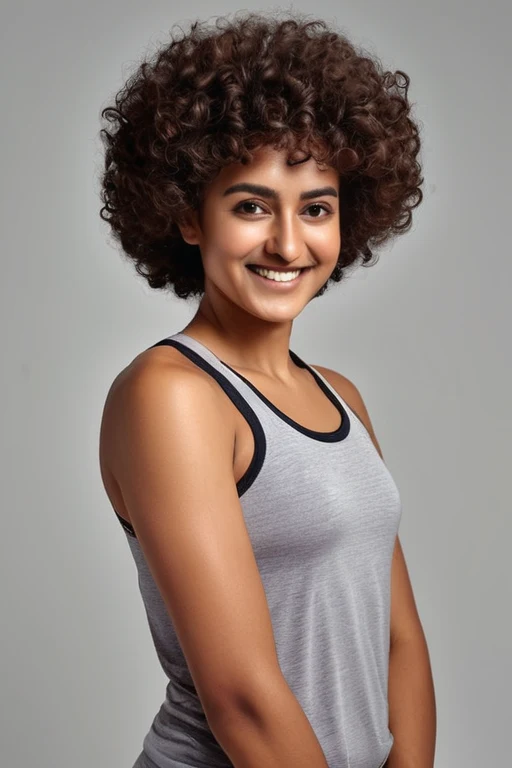
RealVisXL is the realism specialist. Where Juggernaut is a photoreal generalist, RealVisXL is tuned harder toward photographic accuracy in lighting and material rendering. Skin texture, fabric weave, metal specularity all read closer to physical reference. Plain SDXL prompting, no Pony vocabulary inheritance.
CyberRealistic XL is Cyberdelia's SDXL-base sibling. Same author, same aesthetic DNA, but on plain SDXL rather than Pony — plain SDXL prompts, no score tags, no Pony inheritance, but the same cold-DSLR look. If you like the Cyberrealistic look but don't want to deal with score tags, this is the answer.
The decision matrix is straightforward. Pick a pure photoreal SDXL fine-tune if you do not need Pony's vocabulary, you prefer plain SDXL prompting, and you want broad subject coverage. Pick Cyberrealistic Pony if you specifically want Pony's pose and character knowledge, you've built a workflow around score-tag prompting, and your output target is photoreal NSFW or photoreal character work where Pony's vocabulary saves you LoRAs.
A reasonable working setup is to keep one of each loaded — a pure photoreal SDXL fine-tune for general photo work, Cyberrealistic Pony for character and NSFW work. They don't compete; they cover different jobs.
NSFW Posture
Cyberrealistic Pony inherits Pony's NSFW capability natively. The 1:1 SFW/Q/E rating split in Pony's training meant explicit content was a first-class citizen of the model's distribution rather than a region steered away from. Cyberrealistic Pony's fine-tune did not strip that out — it converted rendering style to photoreal while keeping explicit-rating coverage and pose vocabulary intact.
In practice this means explicit content sits in stable photoreal aesthetic without the prompt scaffolding you need on neutralized models. The pose vocabulary works. The rating tags work. The output is photoreal.
That capability does not change what you can do with the output. The Civitai Commercial Images Only license is a real constraint. Beyond licensing, platform terms wherever you publish — image hosts, social platforms, marketplaces — set their own rules regardless of what the model can technically produce. Discuss NSFW capability in clinical terms in your own work and respect platform terms wherever you publish. Pretending the constraints don't exist is how creators get accounts shut down.
License — Civitai Commercial (Images Only)
The license on Cyberrealistic Pony is the Civitai Commercial — Images Only category. This is a non-trivial license and worth reading carefully before any commercial deployment. Read the actual license text on the model's Civitai page; what follows is a journalistic summary, not legal advice.
What it permits:
- Commercial use of images you generate. Sell, license, use in products, use in advertising. The output of inference belongs to you.
- Local and self-hosted inference for your own commercial work.
- Personal-use derivatives — fine-tuning a LoRA on top, merging for personal use.
What it prohibits or restricts:
- Commercial distribution of the checkpoint itself. You cannot resell, sublicense, or commercially redistribute the weights.
- Commercial distribution of derivative weights. A LoRA, merge or fine-tune using Cyberrealistic Pony as a base inherits restrictions.
- Hosted inference services that monetize the model directly typically fall under restrictions needing explicit permission. This is the gray zone that most affects platforms.
- Attribution requirements — derivatives and certain redistributions require credit.
For most independent creators: if you generate images and use them commercially, you're inside the license. If you build a paid generation service or redistribute weights or derivative weights commercially, you need to read the license carefully and possibly get explicit permission. Pony-base models inherit Pony's terms in addition to whatever the fine-tune adds, so check both. The author's Civitai page is the source of truth.
When To Use Cyberrealistic Pony And When To Reach For Something Else
To close, the practical decision tree as compactly as possible.
Use Cyberrealistic Pony when: you want photoreal NSFW or character work with Pony's pose and named-character vocabulary, you're already on score-tag prompting and don't want to retrain that habit, the cold DSLR realism aesthetic fits your output target, and your distribution plan is image-output-only.
Use Pony Realism when: you want the same Pony vocabulary inheritance but a warmer, more flattering aesthetic register, especially for portrait-oriented work where the subject should read attractive in conventional terms.
Use Juggernaut XL or RealVisXL when: you want pure photoreal generalist work, plain SDXL prompting suits you better than score tags, you don't need Pony's pose or character vocabulary, and you want broad subject coverage including landscapes, products and scenes that Pony-base models handle awkwardly.
Use CyberRealistic XL when: you want Cyberdelia's specific cold-DSLR aesthetic but on plain SDXL prompting rather than Pony score tags.
Use vanilla Pony Diffusion XL when: you want anime or stylized output with the full Pony vocabulary and you don't want photoreal output at all. This is still the right choice for the original use case.
The honest summary: Cyberrealistic Pony is a niche model that's very good at its niche. It's not a generalist and doesn't try to be one. Choosing it because it's a popular Pony fork without thinking about whether you need Pony semantics is a small mistake that will quietly cost you output quality on jobs that wanted a pure photoreal model. Pick it on purpose, prompt it correctly, respect the license, and it earns its slot in a serious workflow.


