
If you have spent any time picking through the Illustrious checkpoint shelf on Civitai or Hugging Face in 2025, you have run into Hassaku XL Illustrious. It is one of the half-dozen merger checkpoints that the anime side of the SDXL ecosystem keeps recommending, and unlike most of its neighbours it carries a recognisable brand — the "Hassaku look" predates Illustrious by more than a year, and the new Illustrious-based release is the third major iteration of a checkpoint line that has been quietly accumulating users since 2023. This article walks through what the model actually is, how it differs from vanilla Illustrious and from the other big merger checkpoints, what its prompt syntax wants, and where it sits relative to Pony Diffusion XL — the canonical comparison anyone choosing an anime SDXL model has to make.

What Hassaku XL Illustrious Is
Hassaku XL Illustrious is an anime-focused SDXL checkpoint built on top of Illustrious XL v0.1. It is authored by the user known as Hassaku (sometimes called Ikena in older release notes), a long-running anime-checkpoint maintainer who has been shipping models since the SDXL 1.0 era. The Illustrious version is not a from-scratch training run; it is a merger and light fine-tune that takes the Illustrious base, layers in Hassaku's signature shading and colour register, and ships a checkpoint that prompts in the standard Illustrious plain-Danbooru style while producing an output that looks distinctly warmer and softer than vanilla Illustrious. It targets clean Danbooru-style anime illustration, has strong knowledge of named characters, and includes native NSFW capability without any jailbreak prompt. In short: it is Illustrious-compatible, NSFW-by-default, and visually opinionated in a way that vanilla Illustrious is not.
The Illustrious Lineage Behind It
To understand what Hassaku XL Illustrious is doing, you need a quick map of the base model. Illustrious XL v0.1 was released by OnomaAI in December 2024. It is an SDXL fine-tune trained on roughly 7.5 million Danbooru-tagged images, designed specifically to address the prompt-syntax problems that had been accumulating in the anime SDXL ecosystem. Where Pony Diffusion XL had introduced its own quality-score tags (score_9, score_8_up, and so on), and Animagine had pushed a hybrid syntax, Illustrious went back to plain Danbooru tags — no score system, no proprietary quality words, just the same tag vocabulary that Danbooru has been using for two decades. That choice made it the natural successor for anime checkpoint authors who wanted out of the score-tag regime, and through 2025 it became the dominant base for new anime SDXL releases.
Hassaku XL Illustrious is one of the merger checkpoints that sits in this lineage. So is WAI Illustrious, Prefect Illustrious, Nova Anime XL, and a long tail of smaller community releases. They all share the Illustrious base, the plain-tag prompt syntax, and the Danbooru-trained character knowledge. What differentiates them is the merger recipe — which other checkpoints got blended in, what fine-tune deltas were applied on top, and how the author tuned the colour and shading register. Hassaku's contribution to that recipe is a carryover from his pre-Illustrious work: the original Hassaku XL on plain SDXL was popular precisely because of its soft-shaded, slightly warm look, and the Illustrious release is an effort to keep that visual identity while moving onto the modern base. Worth noting: before Illustrious took over, the previous-generation anime base most authors built on was Animagine XL, and Hassaku's earlier SDXL releases sat in that ecosystem before migrating.
What Makes Hassaku Different From Vanilla Illustrious
This is the question most readers actually arrive with: if Illustrious XL v0.1 already exists and is freely downloadable, why install a merger on top of it? The answer is that vanilla Illustrious is a base model in the literal sense — it is balanced, neutral, and aesthetically uncommitted. It produces competent anime output but does not have a strong visual personality. The merger checkpoints exist to push it in specific aesthetic directions, and Hassaku's direction has four concrete characteristics worth naming.
Colour palette runs warmer. Side-by-side with vanilla Illustrious on the same prompt and seed, Hassaku's outputs sit a few hundred kelvin warmer. Skin tones lean toward peach rather than neutral, backgrounds carry slightly more saturation, and the overall image reads as if it has been graded for a softer, more illustrative look. This is not a dramatic shift — it is not anywhere near the level of an analog-film LoRA — but it is consistent enough that you can recognise a Hassaku output across a batch.
Shading register is softer. Vanilla Illustrious tends toward a relatively crisp cel-shading style with hard shadow edges. Hassaku softens those edges, blends midtones more aggressively, and produces a look closer to digital watercolour or what Danbooru users would tag as soft shading. If you are coming from the original SDXL Hassaku, this is the same characteristic — it survived the migration to Illustrious.
Character coverage is strong but not maximal. Hassaku XL Illustrious knows most of the Danbooru-tagged characters that the Illustrious base knows, plus some additional reinforcement from the merger sources. It is not the most exhaustive character checkpoint in the ecosystem — that title generally goes to WAI or to one of the heavily community-merged variants — but for the major characters from popular series, recognition is reliable.
NSFW is native, not bolted on. This matters for usage planning. Some Illustrious mergers are SFW-tuned and require either a NSFW LoRA or a jailbreak-style negative prompt to produce explicit content. Hassaku is not in that camp — explicit Danbooru tags work directly, the model does not refuse, and the NSFW outputs match the same soft-shaded style as the SFW ones rather than degrading to a different aesthetic. If you need an anime checkpoint that handles both registers without LoRA gymnastics, this is one of the cleaner options.
Prompt Syntax — Plain Danbooru, No Score Tags
Hassaku XL Illustrious prompts exactly like vanilla Illustrious, which is to say plain Danbooru tags separated by commas. There are no score_9, score_8_up, or other Pony-style quality tokens — those are Pony-specific and including them on an Illustrious checkpoint either does nothing or actively degrades output. The standard quality booster set on Illustrious-family models is masterpiece, best quality, very aesthetic, absurdres, and the negative prompt set most users converge on is worst quality, low quality, lowres, bad anatomy, bad hands, error, missing fingers, extra digit, fewer digits, jpeg artifacts, signature, watermark.
A clean SFW portrait prompt:
`` masterpiece, best quality, very aesthetic, absurdres, 1girl, solo, long hair, blue eyes, school uniform, classroom, sitting at desk, looking at viewer, soft lighting, depth of field ``
A NSFW prompt that exercises the native explicit capability:
`` masterpiece, best quality, very aesthetic, absurdres, 1girl, solo, nude, large breasts, on bed, indoor, evening, detailed skin, soft shading, looking at viewer ``
A named-character prompt — Hassaku's character recognition is strongest with prompts in the form \( \) per Danbooru convention:
`` masterpiece, best quality, very aesthetic, absurdres, makima \(chainsaw man\), 1girl, solo, red hair, braid, business suit, office background, looking at viewer, cinematic lighting ``
Backslash-escaping the parentheses is required in most front-ends (Automatic1111, Forge, ComfyUI text-encode nodes that follow A1111 weighting syntax) because raw parentheses are interpreted as weight modifiers. If your front-end uses a different syntax, adapt accordingly — the underlying tag is the same.
A few syntax notes specific to this checkpoint. Tag order matters slightly less than on Pony but still has measurable effect; lead with the character/subject tag, then composition, then style modifiers. Weight modifiers like (soft shading:1.2) work but Hassaku is sensitive to overweighting — values above about 1.3 tend to introduce artefacts. Quality boosters at the front of the prompt have more effect than at the back. None of this is unique to Hassaku — it is standard Illustrious-family behaviour — but if you are coming from Pony you will need to unlearn the score-tag habit specifically.
Hardware: 8 GB Floor, 12 GB Comfortable
Hassaku XL Illustrious is a standard SDXL checkpoint at fp16 precision, which means hardware requirements track the SDXL norm rather than anything checkpoint-specific. The practical floor is 8 GB of VRAM; below that you can still run it with aggressive offload but you will be paying a meaningful speed penalty. The comfortable target is 12 GB or more, where you can run at full resolution with batch size 1 and have headroom for a refiner pass or LoRA stack.
| VRAM | Status | What you can realistically do |
|---|---|---|
| 6 GB | Works with offload | 1024x1024 single image, fp16, ~25-35s per image, model offload to system RAM |
| 8 GB | Minimum comfortable | 1024x1024, fp16, ~12-18s per image, no offload, batch size 1 |
| 12 GB | Comfortable | 1024x1024 with refiner, batch size 2, room for 2-3 LoRAs |
| 16 GB+ | Headroom | 1536x1536 native, batch size 4, full LoRA stacks, hires fix |
Recommended sampler is DPM++ 2M Karras or Euler a, both at 24-32 steps. CFG sits in the 5-7 range — Hassaku does not respond well to CFG above 8, where outputs start to oversaturate and lose the soft-shading character. For hires fix, 1.5x upscale with a denoising strength of 0.35-0.45 is the typical setting; higher denoising starts to drift the image away from the base composition.
Generation times scale roughly linearly with step count and resolution. On a 12 GB RTX 3060, a 1024x1024 image at 28 steps with DPM++ 2M Karras lands around 14 seconds; on a 24 GB RTX 4090, the same generation runs in roughly 4 seconds. CPU-only inference is technically possible but not practical — expect minutes per image rather than seconds.
How It Compares To Other Illustrious Mergers
The Illustrious merger field is crowded. Four checkpoints get mentioned most often when users compare options: Hassaku, WAI, Prefect, and Nova Anime. Here is the honest read on each.
WAI Illustrious is the broad-coverage merger. It has the most exhaustive character recognition of the four, leans toward a slightly cooler and more neutral colour palette, and produces output that reads as the closest to "vanilla Illustrious but better at recognising things." It is the safe default for character work — if you do not know what your prompt will demand, WAI is unlikely to fail you. It is less visually distinctive than Hassaku.

Prefect Illustrious XL is the polish-and-detail merger. It pushes harder on fine detail rendering — eyelashes, fabric texture, background elements — and produces outputs that feel more "finished" at lower step counts. The tradeoff is that it is slightly less forgiving on under-specified prompts; it tends to fill the frame with detail whether or not you asked for it. Good pick when you are doing illustration-style work and want maximum detail per generation.

Nova Anime XL sits closer to a flat, modern anime style — think contemporary streaming-era anime aesthetics rather than illustrated-doujinshi aesthetics. Cleaner lines, flatter colours, less aggressive shading. It is the right pick if you are producing content meant to look like screencaps from a 2024-2025 TV anime rather than illustrative artwork.

Hassaku XL Illustrious, against this field, is the soft-shaded illustrative pick. Warmer than WAI, less detail-aggressive than Prefect, less flat than Nova. The cleanest one-line summary: if you want anime output that looks like a polished personal illustration with soft digital shading, Hassaku is the one to install. If you want something else — clean modern anime, exhaustive character coverage, maximum detail density — one of the others is probably a better fit.
Hassaku XL Illustrious vs Pony Diffusion XL
This is the comparison that determines which half of the SDXL anime ecosystem you are working in. Pony and the Illustrious family are the two dominant bases, and they are not interchangeable.
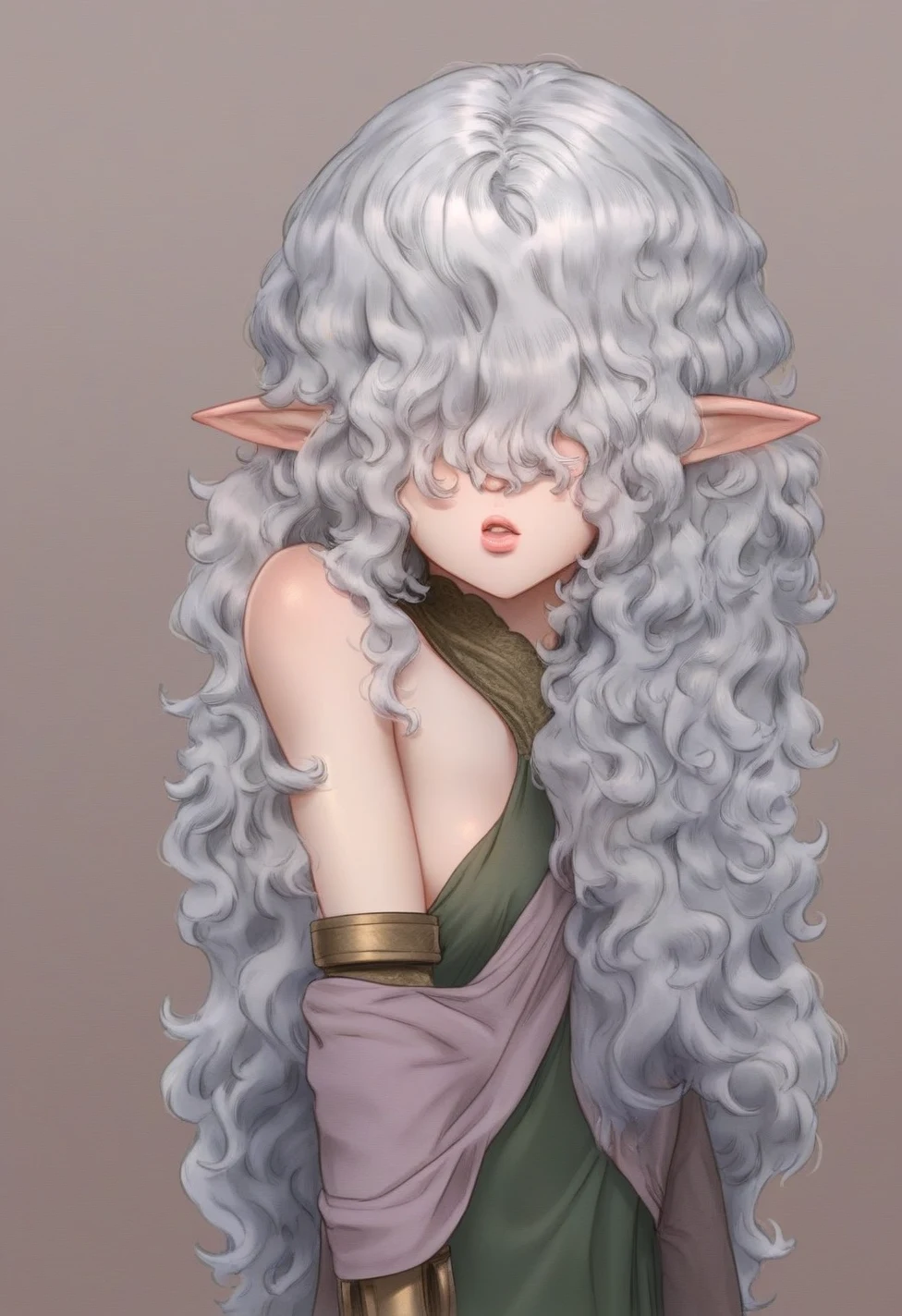
Prompt syntax. Pony uses its score-tag system: score_9, score_8_up, score_7_up at the front of the prompt is mandatory for quality, and Pony's tag vocabulary diverges from Danbooru in places — some tags are Pony-specific aliases. Hassaku Illustrious uses plain Danbooru with the standard quality boosters (masterpiece, best quality, very aesthetic, absurdres). If you have a prompt library written for Pony, none of it ports cleanly to Hassaku without rewriting the quality tokens; if you have a library written for Danbooru directly, it works on Hassaku as-is.
Output register. Pony, in its base form, leans toward a thicker-lined, more illustrative look with stronger black ink presence. Hassaku Illustrious leans softer, with thinner lines and more digital-watercolour shading. Neither is universally better; they target different aesthetic preferences.
NSFW posture. Both are native-NSFW models. Pony has a longer history of explicit-content fine-tuning and arguably more depth in the explicit tag vocabulary; Hassaku's NSFW is competent but does not have Pony's breadth. For straightforward explicit anime, both work fine; for deep tag-vocabulary explicit work, Pony still has an edge.
Ecosystem. Pony has the larger LoRA ecosystem by absolute count, accumulated over its longer release cycle. Illustrious-family LoRAs have grown rapidly through 2025 and now cover most of the same use cases, but Pony's character LoRA library specifically remains larger. If you depend on a specific obscure-character LoRA, check which base it was trained against before committing to a checkpoint.
Photoreal anime. Neither base produces photoreal output natively. If you want anime-Danbooru ergonomics with photoreal output, the canonical pick is Pony Realism, which sits on the Pony base and pushes toward photographic rendering while keeping the score-tag prompt syntax.
The honest summary: Pony and Hassaku Illustrious are both legitimate picks, and the right one depends on your prompt library, your aesthetic preference, and whether your LoRA dependencies are Pony-trained or Illustrious-trained. There is no global winner.
License — Fair AI Public License 1.0-SD
Hassaku XL Illustrious inherits the Fair AI Public License 1.0-SD from its Illustrious base. This is a commercial-permissive license — you may use the model commercially, you may distribute derivatives, you may sell outputs. The substantive requirements are attribution and license-propagation: derivative checkpoints must remain under the same license, and you must credit both the Hassaku author and the Illustrious base authors when redistributing. The license does not impose content restrictions of the kind some Stability AI licenses do; NSFW use is permitted.
For commercial production work, the practical implications are: yes you can use it on a paying client project, yes you can sell prints or digital outputs, yes you can use it in a hosted service. You do need to keep the license file with any redistributed weights, and you need attribution if you ship a downstream merger or fine-tune. For most end-user image generation, attribution is informally satisfied by mentioning the model in any documentation; for commercial redistribution of weights, follow the license text precisely.
When To Use Hassaku And When To Reach For Something Else
A short decision guide for the most common scenarios.
SFW anime portrait, illustrated style. Hassaku is a strong default. The soft-shaded warm-palette look is well-suited to portrait work and the model's character knowledge handles named characters reliably.
NSFW anime, native model, no LoRA stack. Hassaku works cleanly here — explicit tags resolve directly, the soft-shading aesthetic carries into NSFW outputs, and you do not need a jailbreak. If you need maximum explicit tag-vocabulary depth, consider Pony instead.
Named-character cosplay or fanart. Hassaku is competent. If you find a specific character is poorly recognised, WAI Illustrious is worth trying — its broader character coverage often catches edge cases Hassaku misses. For obscure characters, you will end up needing a character LoRA either way.
Photoreal anime. Hassaku is the wrong tool. It is a stylised illustration model and does not produce photoreal output. Use Pony Realism for anime-Danbooru ergonomics with photoreal rendering, or one of the dedicated photoreal SDXL checkpoints if Danbooru tagging is not a hard requirement.
Modern flat anime / streaming-anime aesthetic. Hassaku is too soft-shaded for this look. Use Nova Anime XL.
Maximum detail density, illustration work. Prefect Illustrious is more detail-aggressive than Hassaku. If you find Hassaku's outputs underpopulated at default settings, Prefect is the upgrade path.
Generic Illustrious base, no aesthetic commitment. If you do not yet know what visual style you want and you want a neutral starting point, vanilla Illustrious XL v0.1 itself is fine. Install Hassaku when you have decided you want the warm soft-shaded look specifically — that is the purchase decision the merger is asking you to make.


