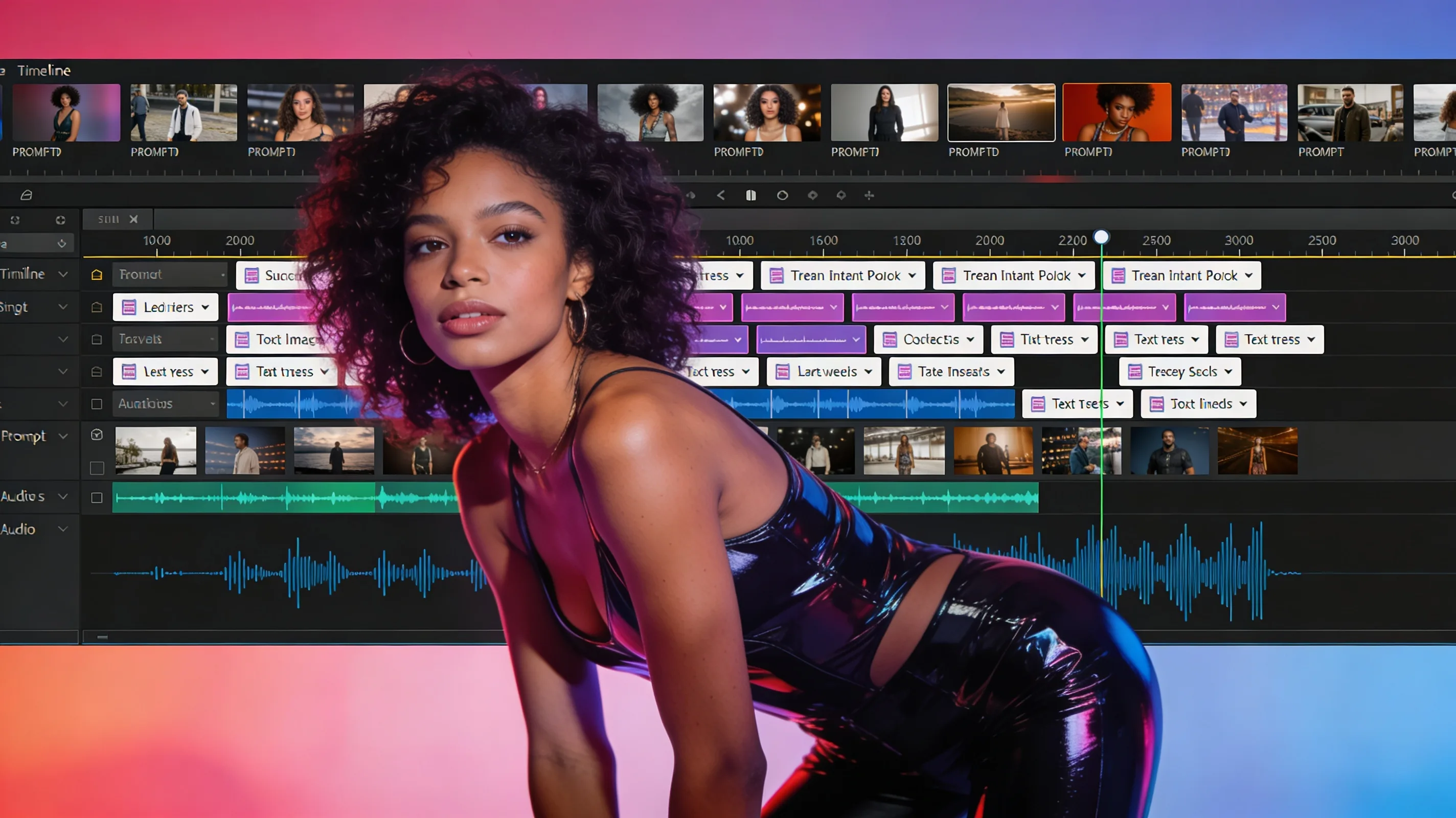
The timeline interface addresses a common pain point in ComfyUI video work: chaining multiple nodes to orchestrate complex sequences. Instead of wiring separate loaders, samplers, and audio nodes, LTX Director consolidates the workflow into a single editor where users can see the full composition at a glance. Image segments can be placed at specific timestamps, text prompts can transition mid-generation via Prompt Relay, and audio clips sync to the video timeline without external tools.
Prompt Relay, originally developed by Gordon Chen, allows granular control over diffusion prompts during video generation—users can specify different prompts for different frame ranges, enabling smooth transitions or abrupt scene changes within a single pass. LTX Director integrates this directly into the timeline: each text segment on the track corresponds to a prompt window, and the node handles the relay logic automatically. The first/middle/last frame feature supports an arbitrary number of keyframes, making it easier to lock specific frames as anchors while the model interpolates between them.
Custom audio support is a one-button toggle. Users import audio files, trim them in the timeline, and the node exports the final video with the audio track embedded. The audio layer works alongside all other features—keyframes, prompt relay, and image-to-video—without requiring separate audio post-processing.
Developer WhatDreamsCost built LTX Director over six days in May 2026, spending sixteen-plus hours daily with Gemini as a coding assistant. The node succeeds two earlier projects: LTX Sequencer and Multi Image Loader. It's available now on GitHub at github.com/WhatDreamsCost/WhatDreamsCost-ComfyUI and targets LTX 2.3, an open-weight video diffusion model that runs locally in ComfyUI without safety enforcement.