
Z-Image TURBO LoRA training yields better results with legacy adapter than official de-distilled path
A Stable Diffusion practitioner reports stronger subject LoRAs when training Z-Image TURBO with the older workaround adapter instead of the official de-distilled or BASE model paths, raising questions about optimal training workflows.
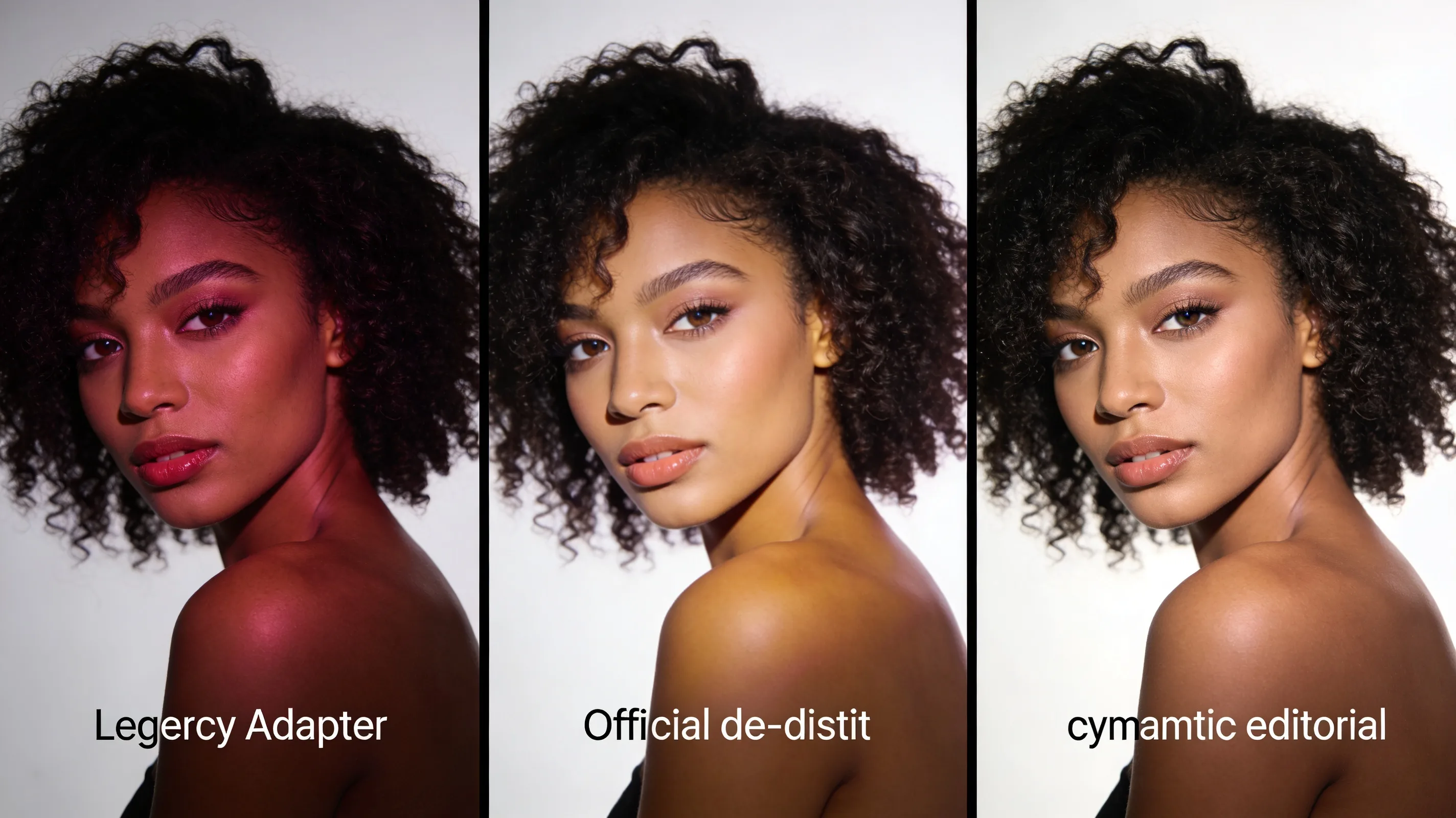
Z-Image TURBO LoRA training is producing inconsistent results across different adapter configurations, according to a user testing character-consistency workflows in ai-toolkit. The practitioner found that the legacy "workaround" adapter—originally a stopgap before official de-distillation support—delivers noticeably better subject fidelity than either the de-distilled weights or training on Z-Image BASE and inferring on TURBO, the workflow Stability AI recommended when the model launched.
The finding challenges the prevailing wisdom that training on BASE and running on TURBO should yield superior LoRAs. That approach was supposed to sidestep the distillation artifacts baked into TURBO's weights, giving fine-tunes a cleaner starting point. In practice, at least one user is seeing the opposite: the old adapter path, which directly targets TURBO's distilled latent space, is holding subject details more reliably than the theoretically cleaner BASE-to-TURBO pipeline. The gap is wide enough that the user is questioning whether the de-distillation step introduced regressions or whether ai-toolkit's handling of the BASE model needs tuning.
Character-consistency LoRAs were trivial to train on FLUX.1-dev—most practitioners could lock in a face or costume with a handful of images and minimal hyperparameter tweaking. Z-Image TURBO, despite being faster at inference, hasn't matched that ease yet. Whether the issue is in the model's architecture, the distillation process, or the training tooling remains unclear. The community is still mapping out which combinations of base weights, adapters, and training scripts actually converge on stable character embeddings. The next round of Z-Image releases should clarify whether Stability AI plans to address LoRA training ergonomics directly or leave it to the ecosystem to reverse-engineer optimal workflows.