
Pony V6 style consistency proves elusive for indie game sprite workflow
A game developer's weeklong struggle to replicate a lucky Pony V6 output highlights the model's sensitivity to prompt variation and the absence of built-in style-locking tools for production pipelines.
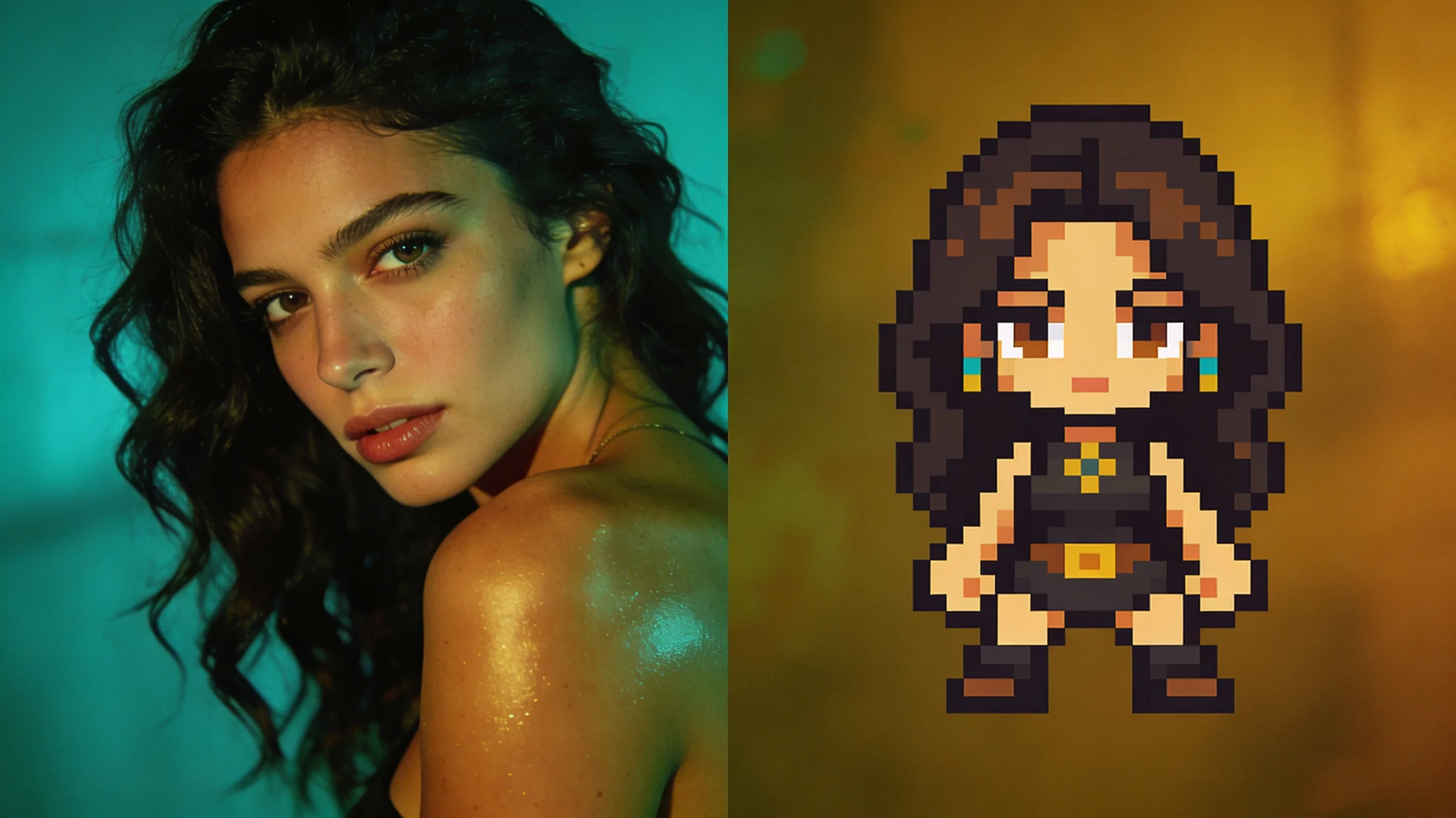
"Style consistency in open-weight image models remains a production bottleneck," according to practitioners building game assets with Pony V6. An indie developer working on sprite generation reports spending a week unable to reproduce a single lucky output, underscoring a common friction point in open-weight image synthesis: maintaining visual coherence across a production batch.
The developer stumbled on an ideal result using a minimal prompt—"1girl, solo, female, beautiful face"—but subsequent attempts with character-swap variations ("1man, young") yielded visually inconsistent outputs. The goal was a reusable "base prompt" that would anchor style while allowing character attributes to vary, a workflow pattern familiar to anyone building game assets or comic panels at scale.
Pony V6, a Stable Diffusion XL fine-tune popular for its flexibility and open license, does not ship with native style-locking features. Practitioners typically address this through seed pinning, LoRA training on a small reference set, or verbose style descriptors ("cartoon, western comics, flat shading"). The discussion drew suggestions ranging from extracting CLIP embeddings to training a custom LoRA on the lucky output itself. One approach recommended the "style-locked" workflow pattern in ComfyUI, which freezes latent noise structure while varying text conditioning—a technique that requires familiarity with node-based pipelines and is not accessible from simpler UIs like Automatic1111's default txt2img tab.
The challenge reflects a broader tension in open-weight tooling: models trained for maximum prompt responsiveness often resist the kind of deterministic control production workflows demand. Pony V6's strength—its sensitivity to natural-language style cues—becomes a liability when a user needs pixel-level repeatability across dozens of character variations.