
Stable Diffusion users pair chatbots with image generation for faster iteration
Practitioners report chatbots now handle prompt refinement, scene planning, and workflow design alongside local image generation, blurring the line between text and visual tools.
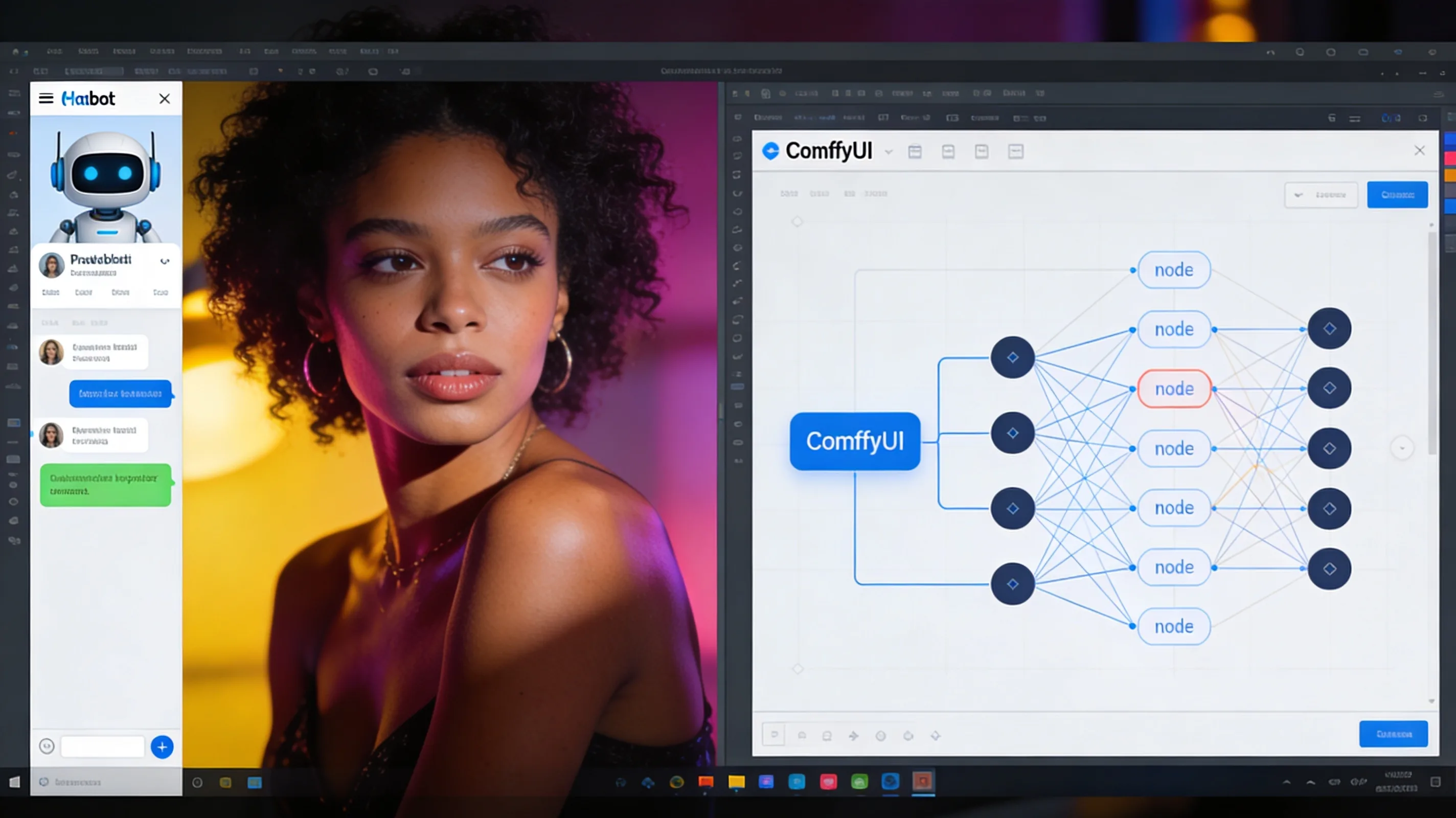
Stable Diffusion users are folding AI chatbots into their image generation pipelines, using them for prompt refinement, scene ideation, and full workflow planning. The shift marks a practical convergence: where practitioners once treated text models and image models as separate utilities, they now run them side-by-side in a single creative session. ChatGPT, Claude, and local LLMs appear in the same desktop setups that host ComfyUI nodes and A1111 tabs, with users bouncing between the two to iterate faster.
The integration is informal but widespread. A user drafts a rough concept in a chatbot, receives a refined prompt or a list of scene elements, then feeds that output directly into Stable Diffusion. Some workflows automate the handoff with custom scripts or API calls; others keep it manual, copy-pasting between browser tabs. The result is a tighter feedback loop than the early days of prompt engineering, when users refined text prompts in isolation and hoped the image model would parse them correctly.
As open-weight text models grow more capable and image models add native text encoders, the boundary between chatbot and image generator continues to soften. The next phase likely involves tighter API bridges—ComfyUI nodes that call local LLMs directly, or image models that accept natural-language instructions without a separate prompt formatter. For now, the pairing remains manual but functional, and practitioners who master both halves of the loop are producing work faster than those who treat them as separate domains.