

Tutu.ru MCP server cuts AI agent context by 75% on travel bookings
Russian travel platform Tutu.ru released an MCP server that lets AI agents search flights, trains, buses, and hotels across five categories, returning booking links with pre-filled carts. Token optimization brought seven-train scenarios from 133k to 34k tokens.
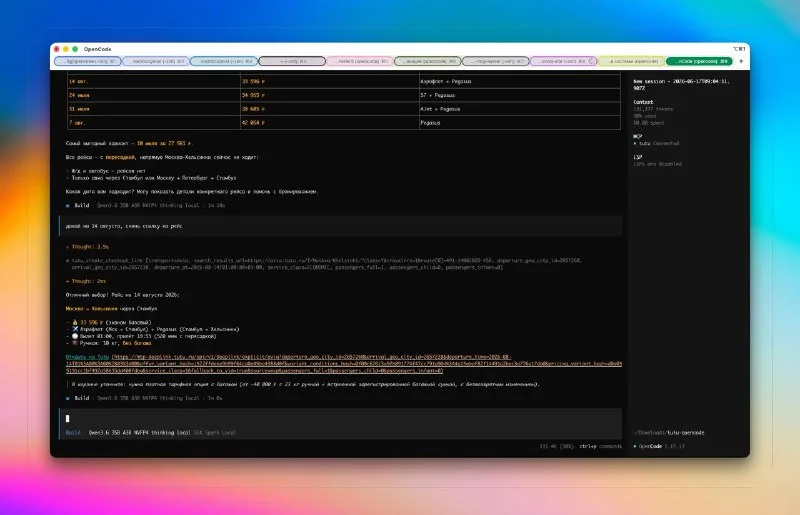
Tutu.ru released an MCP server this week that wires flight, train, bus, and hotel search into AI agents. The server exposes five search endpoints matching the mobile app's categories and returns booking URLs that drop users directly into checkout with seats already selected. Hotels include review text so agents can summarize pros and cons beyond the listing copy.
The real engineering story emerged in testing. A developer running local Qwen3-30B-A3B found that response payloads ballooned to 133,000 tokens per multi-train scenario—too large for the model's ~130k context window. Rail detail responses ran 66–75 KB uncompressed; hotel results hit 58 KB. A token diet cut rail payloads 75 percent (down to 14–17 KB) and hotel results from 58 KB to 16 KB. After the trim, the same seven-train context dropped to 34,000 tokens, and small open-weight models cleared eval suites that had been failing.
Three test tiers caught bugs static checks missed: unit tests trap logic errors and API signature changes; live tests hit production Tutu endpoints; eval scenarios run full agent loops end-to-end. The eval suite expanded with each feature change and surfaced corner cases invisible to unit coverage. One product question remained unresolved in the release notes—how the platform handles offer acceptance when an AI agent sits between user and vendor, and whether that flow lives server-side or in the booking UI.
The MCP server is live at mcp.tutu.ru/mcp. Watch next for whether Tutu adds rail seat maps or multi-city itinerary chaining to the tool set, and how the platform resolves the acceptance-of-offer handoff between agent and user.


