

Claude extended thinking exposes reasoning steps before answers
Claude now exposes its reasoning steps in a new extended thinking mode, letting users see the model work through problems before answering.
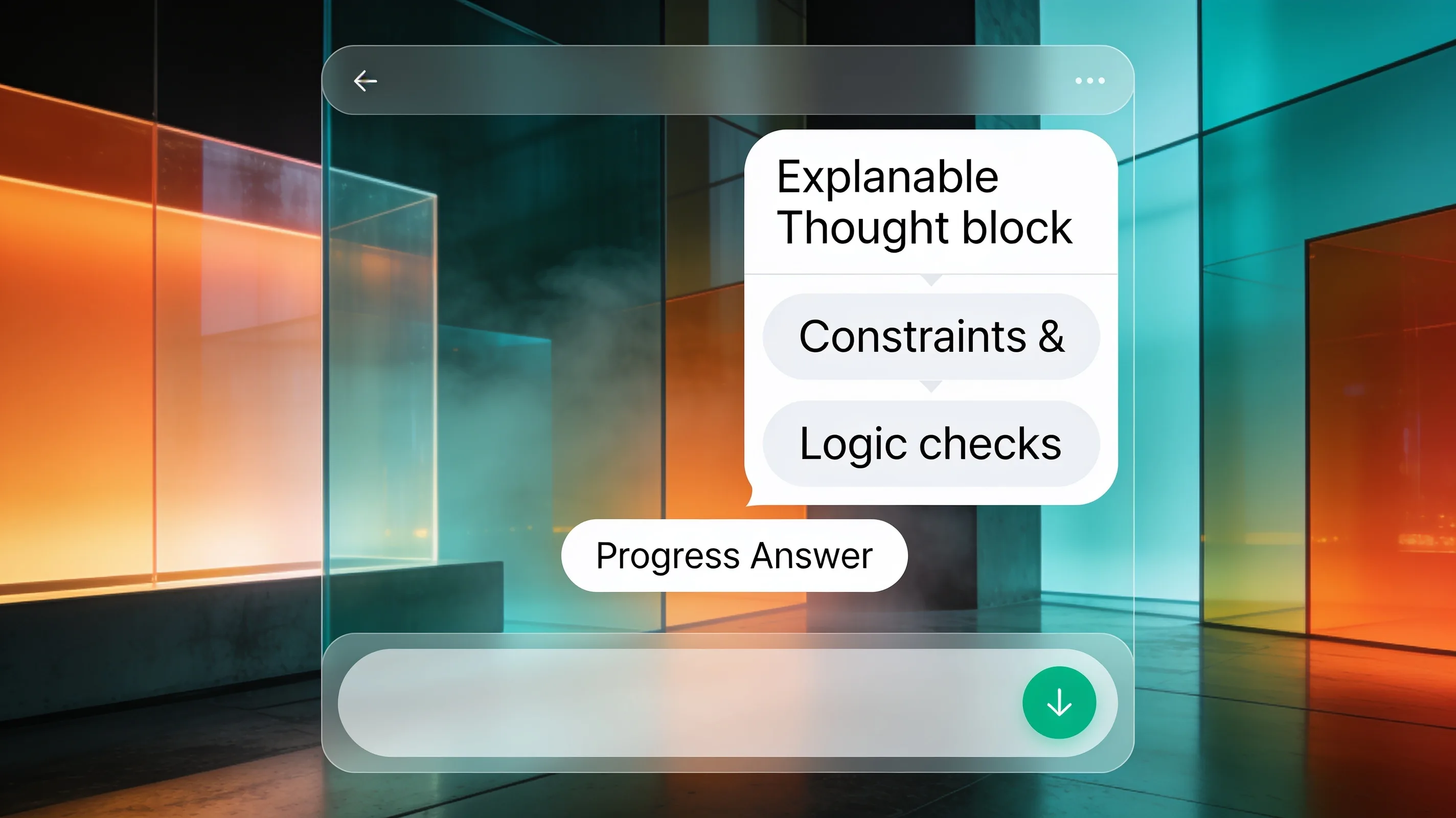
Anthropic released extended thinking for Claude on July 3, a feature that surfaces the model's internal reasoning process before it delivers a final answer. Users can now watch Claude break down complex queries step-by-step, similar to how OpenAI's o1 and o3 models show their work. The feature is live across Claude's web interface and API.
Extended thinking runs appear as expandable thought blocks above Claude's response. The model articulates its approach—identifying constraints, weighing trade-offs, checking its logic—then collapses that reasoning into a polished answer. Anthropic says the mode is most useful for multi-step problems: code debugging, mathematical proofs, strategic planning, and research tasks where transparency matters as much as the conclusion.
How thinking tokens work
The thinking process isn't a separate model. Claude uses the same weights as its standard mode but allocates more tokens to pre-response reasoning when extended thinking is enabled. Responses take longer because the model is doing more work up front, but early testers report fewer logical errors and more coherent explanations on tasks that require chaining multiple inferences.
The feature is available now on Claude Pro and API tiers. Anthropic has not disclosed token costs for the extended reasoning overhead, though the company says it will meter thinking tokens separately from output tokens in future API updates.


