
Couple to Control: Joint noise design boosts Stable Diffusion gallery diversity at no sampling cost
New arXiv preprint shows coupling initial noise across batches boosts diversity in Stable Diffusion without extra sampling cost, matching optimization baselines at standard speed.
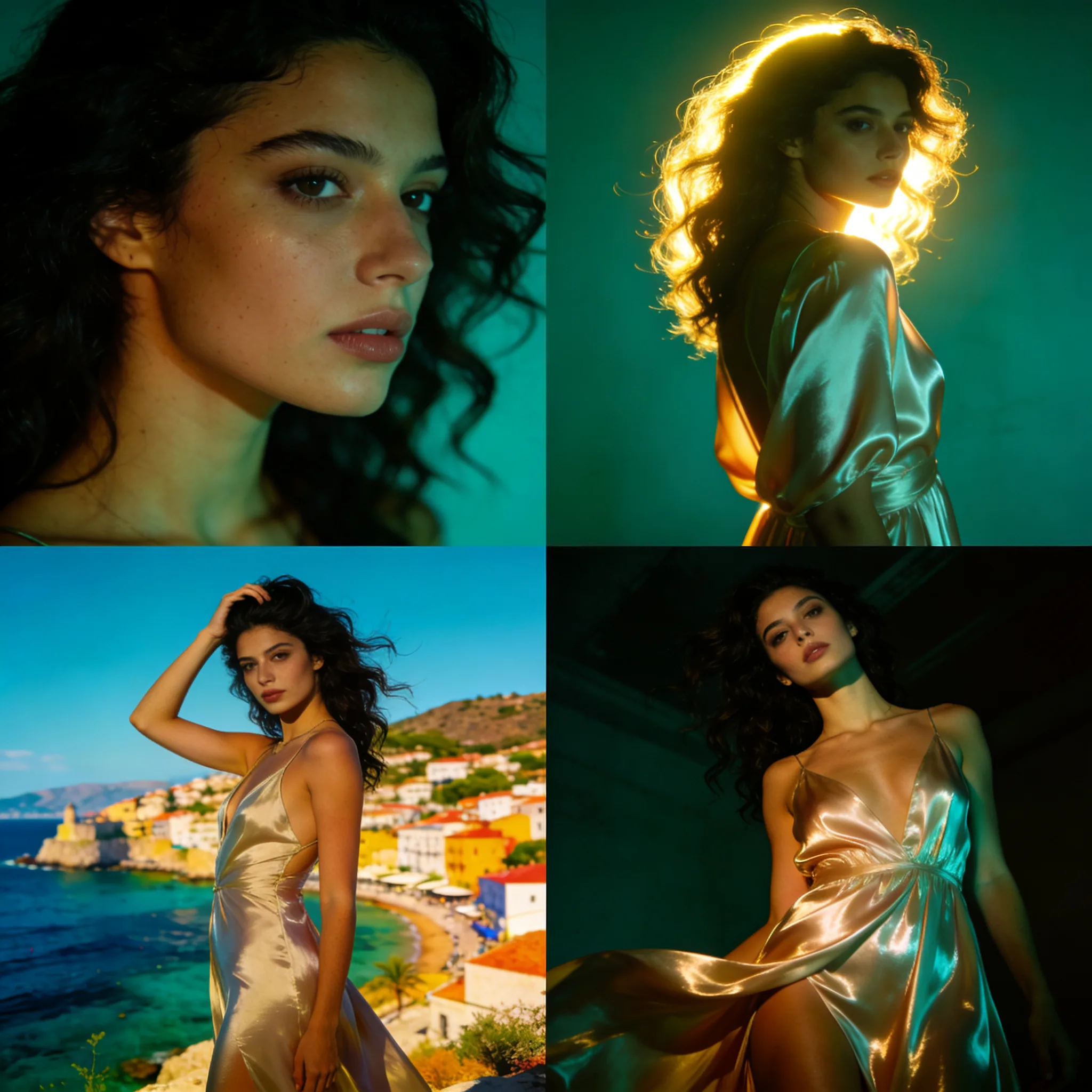
Couple to Control, a new arXiv preprint, proposes coupling the initial noise across a batch of diffusion model samples. Instead of starting each image from independent Gaussian noise, the framework keeps each sample marginally standard Gaussian—so the pretrained model sees the same per-image distribution—while designing the dependence structure across the batch. This reframes seed selection from picking individual random numbers to designing the joint distribution of a multi-sample gallery.
Repulsive Gaussian coupling, one implementation tested in the preprint, pushes samples apart in latent space and improves gallery diversity on SD1.5, SDXL, and SD3 while preserving prompt alignment and image quality. The method matches or beats recent test-time noise-optimization baselines on several diversity metrics at the same sampling cost as independent generation—no extra denoising steps, no CFG tuning, no post-hoc reranking. Subspace couplings also support fixed-object background generation, producing diverse natural backgrounds compared with specialized inpainting baselines and offering a tunable trade-off in foreground fidelity. The framework covers several existing methods as special cases and opens the door to new coupled-noise constructions, serving as both a zero-cost improvement for standard workflows and a foundation for more expensive optimization-based techniques when additional compute is available.