
Developer replaces Claude with Qwen 3.5 9B agent loop for 99% of coding work
A developer built a self-modifying agent framework on Qwen 3.5 9B using map-reduce parallelism to work around context limits, now handling nearly all their development work locally.
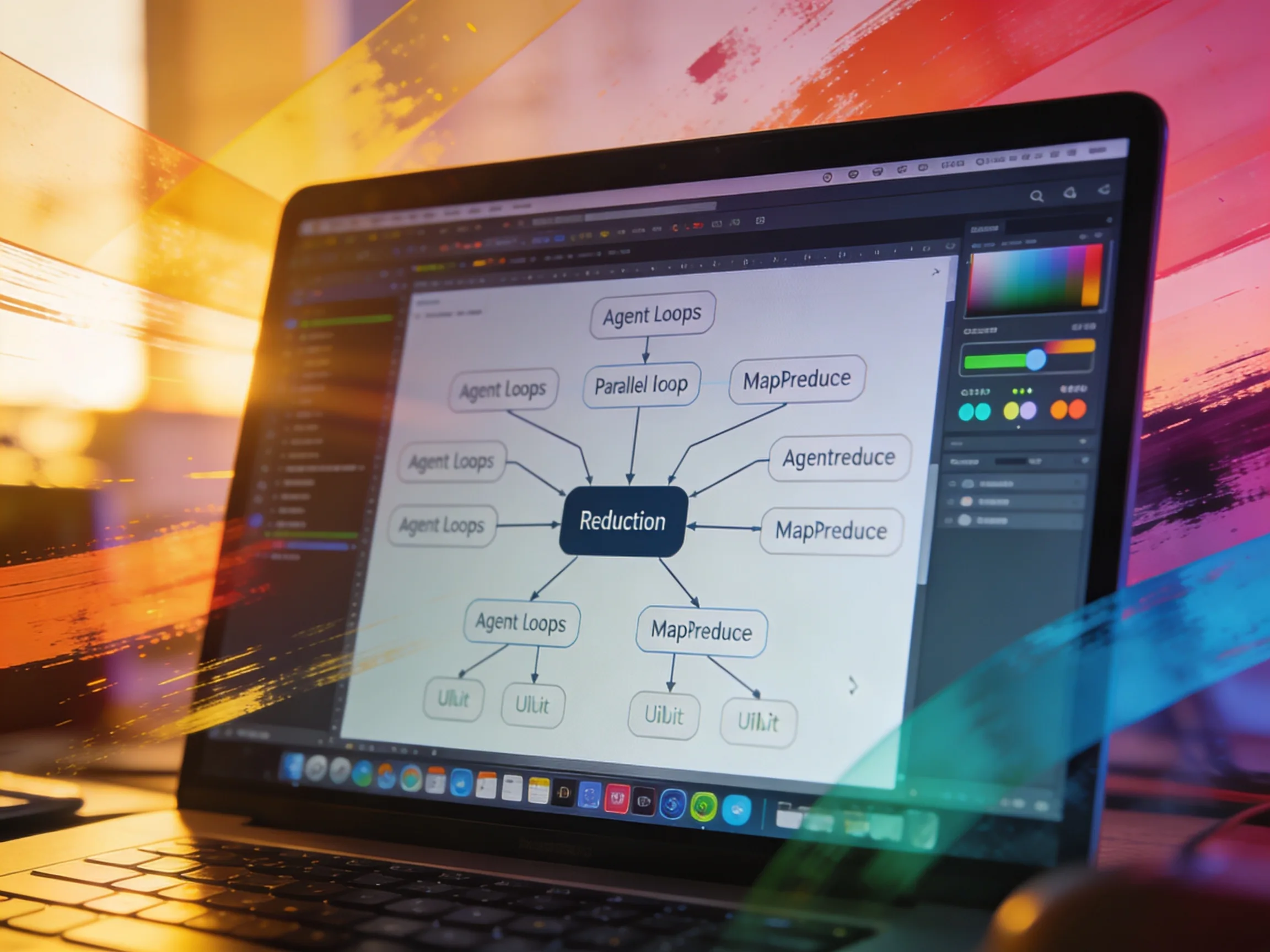
A developer has built a structured agent workflow on Qwen 3.5 9B that now handles 99 percent of their coding tasks, displacing Claude entirely for day-to-day development. The system started as a crude tool-calling loop a month ago and evolved into a self-editing agent capable of parallel task execution through map-reduce patterns, designed to maximize GPU throughput while staying within the 9B model's context window.
The builder describes the process as addictive once the agent could modify its own code, leading to 28 days of iteration that often ran past 5 a.m. The workflow uses structured outputs to reduce variability during the reduce step and a database layer to track execution state across parallel branches. The developer notes that the human approval bottleneck became the limiting factor once the agent reached a stable architecture—the agent would sit idle waiting for reviews while a backlog of tasks piled up.
The map-reduce approach addresses a core limitation of smaller models: you can't dump hundreds of data files onto a 9B parameter checkpoint and expect coherent results. Instead, the framework breaks tasks into chunks that run in parallel, extracting maximum compute from the GPU while respecting context limits. Structured outputs—enforcing JSON schemas or other rigid formats—smooth the reduce step by eliminating the variability that makes merging LLM outputs fragile. The framework remains unreleased but is planned for open-source distribution.