
Production multi-agent fleet cuts debug time to under an hour with five-ring protocol
A production multi-agent deployment uses LangGraph for goal planning, CrewAI for task coordination, and Harbor for scoped tool access and trace logging across a five-ring message protocol.
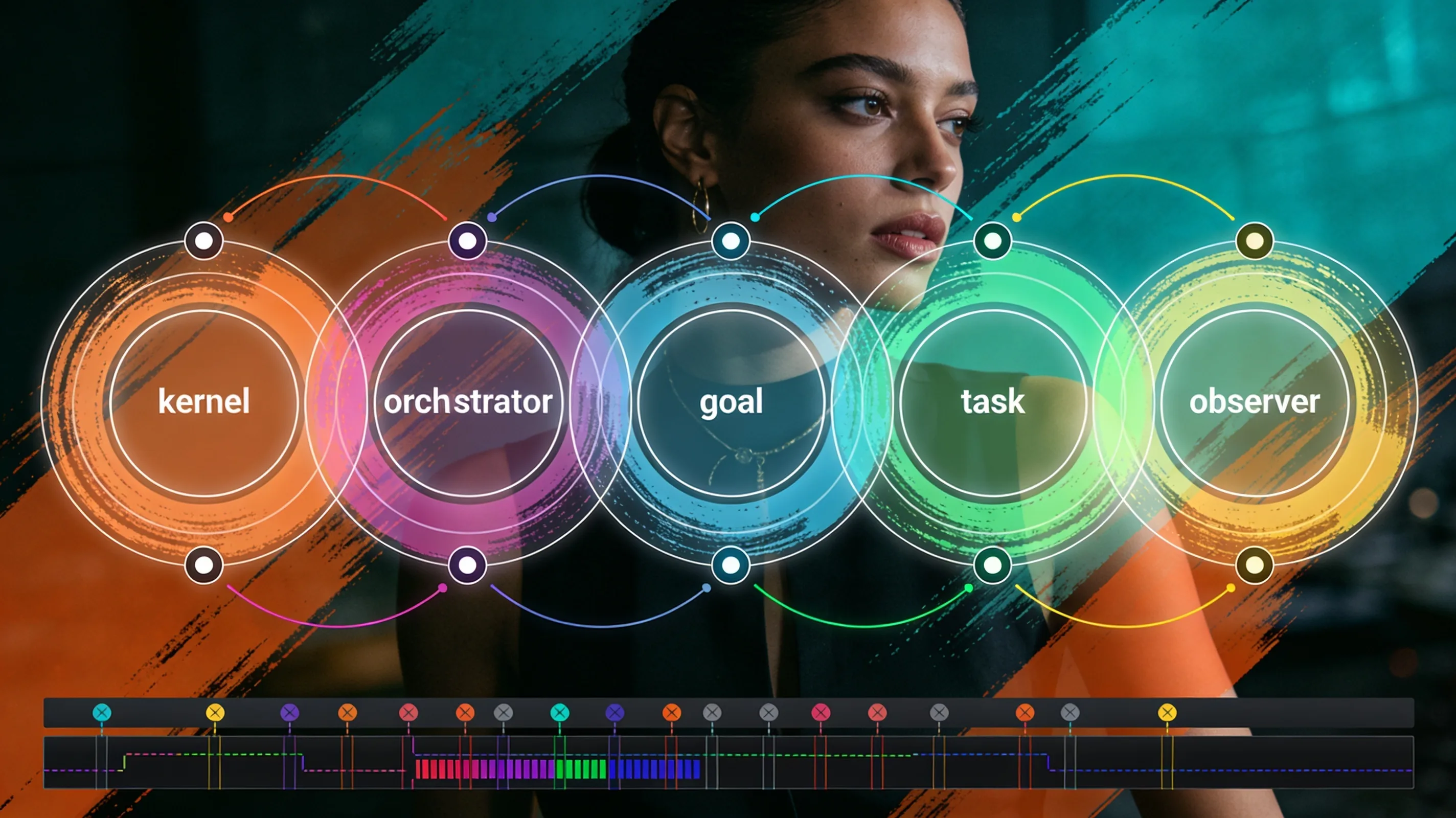
A production multi-agent system running at organizational scale uses a five-ring message protocol layered over LangGraph, CrewAI, and Harbor. The architecture splits agents into three classes—observers that ingest external signals, task agents that execute bounded actions, and goal agents that build plans—all writing to a shared context layer. Ring 0 kernel agents manage lifecycle, Ring 1 orchestrators route messages by metadata, Ring 2 goal agents decompose intents, Ring 3 task agents execute with least privilege, and Ring 4 observers post events without making decisions.
LangGraph handles the goal agent layer with stateful graphs, conditional branching, and checkpointed state that resumes mid-plan when a task agent fails. CrewAI coordinates task agents through role-based assignment and a planning agent that sequences work before execution. Harbor provides the credential and trace layer: every agent gets scoped access to tools and workflows through Harbor's workspace model, credentials stay out of model context, and every tool call—database queries, API hits, downstream workflows—produces a logged trace with full provenance. At fleet scale, the trace layer cuts debug time from a full day to under an hour, while coordination overhead per agent drops as shared execution history grows.